Lent is a forty-day period before Easter. It begins on Ash Wednesday. We skip Sundays when we count the forty days, because Sundays commemorate the Resurrection.
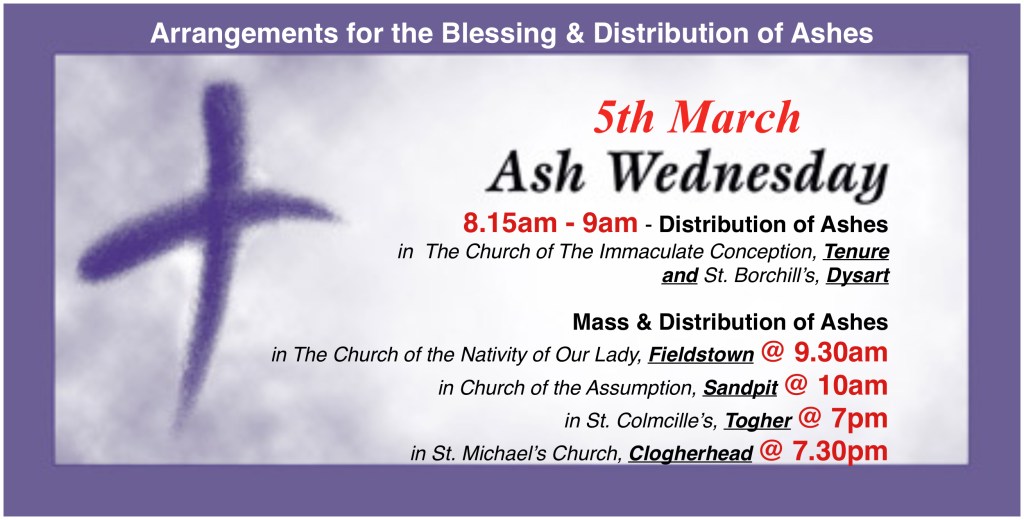
These are the times of Masses for Ash Wednesday in the St. Colmcille’s Pastoral Area;
Lent is a season of soul-searching and repentance. It is a season for reflection and taking stock. Lent originated in the very earliest days of the Church as a preparatory time for Easter, when the faithful rededicated themselves and when converts were instructed in the faith and prepared for baptism. By observing the forty days of Lent, the individual Christian imitates Jesus’ withdrawal into the wilderness for forty days. Lent has been observed in the church since apostolic times.
During Lent, the Pastoral Area will have Stations of The Cross, Sunday Devotions, and other ways to enter into the spirit of the season. These details will be printed on the Pastoral Area Bulletin. Parishioners are also encouraged to engage with faith supports online, see The Catholic Bishops Website
In many countries, the last day before Lent is called Shrove Tuesday, Mardi Gras, Carnival, or Fasching. For centuries, it was customary to fast by abstaining from meat during Ash Wednesday, Good Friday, and at other times during Lent.
Ashes are an ancient sign of penitence; from the middle ages it became the custom to begin Lent by being marked in ash with the sign of the cross.
Churches are kept bare of flowers and decoration. The Gloria in excelsis is not used. The fourth Sunday of Lent (Laetare or Refreshment Sunday) was allowed as a day of relief from the rigour of Lent, and the Feast of the Annunciation almost always falls in Lent; these intervals are the background to the modern observance of Mothering Sunday.
As Holy Week approaches, the atmosphere of the season darkens; the readings begin to anticipate the story of Christ’s suffering and death, and the reading of the Passion Narrative gave to the Fifth Sunday its name of Passion Sunday. There are many devotional exercises which may be used in Lent and Holy Week outside the set liturgy.
 Togher Parish